

Introduction
On Thursday 30 July 2026, I wrote an article titled “Academic theories on technology adoption” which I summarised as including the following:
- Diffusion of Innovation (DOI) theory,
- Technology – Organisation- Environment (TOE) framework,
- Resource Based View (RBV),
- Institutional Theory,
- Technology Acceptance Model (TAM),
- Theory of Planned Behaviour (TPB),
- Unified Theory of Acceptance and Use of Technology (UTAUT) and UTAUT2.
In the same article, I promised that, space permitting, I will write several articles on Artificial Intelligence (AI) and I do hereby commence. In this article I relied on AI itself. I will explain some of the AI tools in future articles.
Attempt at defining AI
Artificial Intelligence (AI) is the science of making machines that can think, learn, and make decisions like humans. At its core, AI involves creating systems that can perform tasks requiring human intelligence, such as recognizing images, understanding speech, solving problems, and making decisions.
In simple terms, AI is like having a smart computer that can learn from experience, solve problems, and make decisions on its own. Rather than merely following rigid instructions, AI systems can process large amounts of data, identify patterns, and improve their performance over time. This capability has transformed industries worldwide, from healthcare and finance to agriculture and manufacturing.
Imagine artificial intelligence (AI) as a sponge or a newborn child. Both start with almost nothing, yet possess an extraordinary capacity to absorb, learn, and adapt from the world around them.
The birth of Artificial Intelligence
According to AI tools I used during my research for this article, while the idea of intelligent machines dates back to ancient myths and early automatons, AI as a formal field of study began in the 1940s and 1950s. The 1950s mark the true beginning of artificial intelligence as a recognized discipline. In 1950, British mathematician Alan Turing published a groundbreaking paper titled “Computing Machinery and Intelligence,” introducing what is now known as the Turing Test—a way to evaluate whether a machine can exhibit intelligent behavior indistinguishable from that of a human.
The term “Artificial Intelligence” was officially coined in 1956 by American computer scientist John McCarthy at the Dartmouth Conference, a seminal workshop that brought together researchers to explore how machines could simulate human intelligence. McCarthy defined AI as “the science of making intelligent machines.”
How AI Works
AI systems rely on several key technologies:
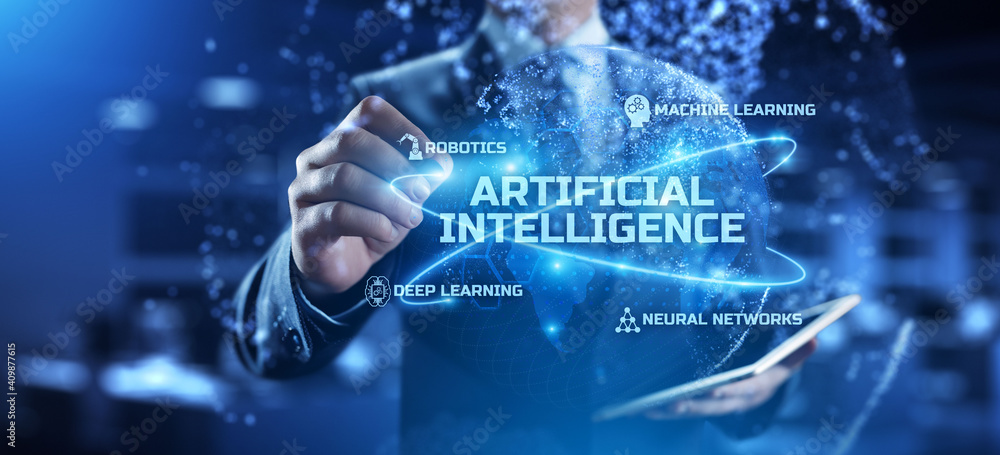
- Machine Learning (ML): Algorithms that learn from data without being explicitly programmed.
- Deep Learning: A subset of ML using neural networks with many layers to model complex patterns.
- Natural Language Processing (NLP): Enabling machines to understand and generate human language.
- Computer Vision: Allowing machines to interpret and analyze visual information.
These technologies enable AI to process vast datasets, recognize patterns, and make predictions or decisions with increasing accuracy.
AI and Algorithms
In Artificial Intelligence (AI), an algorithm is a set of step-by-step instructions or rules that tells a computer how to learn from data, recognize patterns, make decisions, and perform tasks that typically require human intelligence. Think of it as a recipe where the algorithm takes inputs (data), follows a defined process, and produces outputs (predictions, classifications, or actions). In conventional programming, humans write explicit rules (algorithms) for every possible scenario. In AI, algorithms enable machines to learn from examples rather than being explicitly programmed for each case. The algorithm analyzes training data, identifies patterns, and builds a model that can generalize to new, unseen data.
AI algorithms perform three essential functions:
- Data Processing: Accept and analyze input data (images, text, numbers, sensor readings).
- Pattern Recognition: Identify statistical relationships, correlations, and structures within the data.
- Decision-Making: Use learned patterns to make predictions, classify information, or recommend actions.
Why AI matters for Zimbabwe
For Zimbabwe, AI presents opportunities to leapfrog traditional development challenges. In agriculture, AI can optimize crop yields through predictive analytics. In finance, it can enhance credit scoring, fraud detection and forecasting. In healthcare, AI-powered diagnostics can improve access to medical expertise in remote areas.
However, realizing these benefits requires investment in digital infrastructure, skills development, and ethical frameworks to ensure AI serves all Zimbabweans equitably.
The road ahead
From its humble beginnings in the 1950s to today’s sophisticated systems, AI has evolved from a theoretical concept to a transformative force. As we stand on the brink of further breakthroughs, from generative AI to autonomous systems, understanding the basics of AI is no longer optional; it is essential for policymakers, business leaders, and citizens alike.
For Zimbabwe, the question is not whether to adopt AI, but how to harness it responsibly to drive inclusive economic growth and sustainable development.
Conclusion
AI is here to stay and will transform a lot of things in many different areas with serious implications on many careers as it will replace many manual processes. I promise to write more on AI.
Disclaimer
This simplified article is for general information purposes only and does not constitute the writer’s professional advice.
Godknows (GK) Hofisi, LLB(UNISA), B.Acc(UZ), Hons B.Compt (UNISA), CA(Z), ACCA (Business Valuations) MBA (EBS, Heriot- Watt, UK) is the Managing Partner of Hofisi & Partners Commercial Attorneys, chartered accountant, insolvency practitioner, commercial arbitrator, registered tax accountant and advises on deals and transactions. He has extensive experience from industry and commerce and is a former World Bank staffer in the Resource Management Unit. He sits on the Board of the Council of Estate Administrators in Zimbabwe. He writes in his personal capacity. He can be contacted on +263 772 246 900 or ghofisi@hofisilaw.com or gohofisi@gmail.com. Visit www//:hofisilaw.com for more articles.



